Showing posts with label Fix It Fridays. Show all posts

Sunday, August 23, 2015

Dream Big! (But Know That Humanity Is Basically Doomed)

So here's the thing. I just saw TOMORROWLAND (I know, I'm way behind on movies) and it puzzled me.  The message of the film (hammered home with the delicate subtlety of a piano being repeatedly dropped on your head) is that Dreamers are our most precious resources, we must foster them and they can fix any calamity but only if we never ever stop believing in the possibilities of the future.

Yay!  Lovely message, eh?

And it would be, if the basic pretext of the entire film wasn't an assumption that human beings, as a whole, will latch onto any hint of negativity and replicate it diligently until they destroy the world with their persistent Doomsday thinking.

It was strange to me that a film whose entire purpose was to be all "Optimism, rah!" was founded on an assumption so inherently pessimistic.

Also, I gotta say it kind of bugged me that they used dystopian novels like 1984 and Fahrenheit 451 as negative examples--examples of that negative Doomsday thinking--when the entire movie was set up as a dystopian story.  Seriously?

The point of dystopian novels is not to show us that we're doomed!  It's to show that we can break out of that doom if we are only aware of it, that man can rise above, even when we have boxed ourselves into a corner in our quest for perfection/safety/etc.  So why would you use dystopian stories as a symptom of the apocalypse in your heavy-handed Story of Hope?  Especially when your Story of Hope is a dystopian story!  Come on, people.  Think it through!

So while I loved the "Yay, Dreamers!" aspect and several other elements of the story, the basic contradiction of optimism/pessimism confused me like there was no tomorrow.  (See what I did there?)

Friday, February 28, 2014

Gravitationally Questionable

**WARNING: HERE BE SPOILERS**

So... I just went to see Gravity.  I wanted to catch it before the Oscars because I love seeing all the big Oscar pics.  I'd heard all manner of great things about this film.  People told me they were wowed.  I found myself... nonplussed.  I'm not going to do a full Fix-It Friday for this one because... well, I'm not gonna say it's beyond help, but... let's just say smarter folk than I have already debunked some of the major scientific wobbles.  (Neil DeGrasse Tyson also had a lovely list on Twitter entitled "Mysteries of #Gravity"). 

There are some movies that I feel are laws-of-physics optional.  Die Hard.  True Lies.  Basically the whole action genre.  But if you're making a drama about astronauts and you want me to feel all the feels, then you need a little believability, folks. Or at least a passing familiarity with the basic rules of physics.  

Like say if George Clooney has come to a stop (relatively speaking, as they are both still orbiting the earth), holding the other end of Sandra Bullock's tether, he is a body at rest.  A body at rest with no other forces acting on it will remain at rest. So in the absence of gravity, how is he "dragging" her?  And how, when he releases the line, still at rest, mind you, with zero relative momentum, does he then go catapulting with substantial velocity away from her? 

There were other unbelievable physical feats - satellite debris and orbits behaving in wildly unbelievable ways (but nice of them to be on a reliable ninety minute clock). Astronauts traversing distances that stretch the bounds of believability... you name it, but the basic lack of understanding regarding force and momentum was pretty damn egregious to me.  Especially when it results in the completely unnecessary death of one of the characters. 

Some aspects were beautifully detailed and they'd clearly done their homework, so why couldn't they catch some of these jaw-droppingly obvious errors?

If you're making Star Wars, okay, fine, I'll give you some leeway (maybe some dude is using the Force), but Gravity? Please. Get a freaking consultant. Hire Tom Hanks. He knows a ton about space.

Excuse me while I go watch Apollo 13.

Friday, October 25, 2013

Fix-It Friday: Runner Runner

Welcome to another edition of Fix-It Fridays!  Today we're fixing Runner Runner.  Justin Timberlake and Ben Affleck have done some pretty decent movies and I had high hopes that this would be another.  Alas, my hopes were not to be realized.  You ready?  Let's fix this motha.

**SPOILER ALERT!!  HERE BE SPOILERS!!!  LOTS O' SPOILERS!!!**

You know what I love?  Sympathetic protagonists.  I went to go see Runner Runner thinking it would be decent and twisty and actiony. I failed to take into account the fact that in order for a twisty thriller to be satisfying, you have to actually want the protagonist to get away and live happily ever after.  When you kind of want him to be eaten by alligators, the movie can feel like it goes on for-ev-er even if it's only ninety minutes long.

Justin Timerberlake's character?  Yeah, he's pretty much a douche.

Former Wall Street muckety muck.  He was on the way to being a big shot financial tycoon, wheeling and dealing with other people's money to make mad bank for himself, but then the house of cards crashed down and through NO FAULT OF HIS OWN AT ALL he was left penniless.  But never fear!  Justin got into Princeton for his MBA!  Unfortunately, Justin made so much money when he was on Wall Street (none of which he still has) that he is ineligible for financial aid (cue the tiny violins).  Instead of taking a FREAKING STUDENT LOAN, as any normal human being would do, since those are not dependent of previous income levels, Justin becomes an affiliate for off-shore gambling sites, funneling online poker players to certain websites for a commission.  But that isn't gonna get him his tuition fast enough, so he goes on a gambling streak of his own where he proceeds to build up a massive amount of cash, then lose it all in one go.

But it's not his fault!  No!  He couldn't have just been stupid or unlucky!  He was conned.  He uses someone else's super math powers to deduce that the online poker site really did rip him off.  Goes down to Costa Rica to confront the head of the company, who thanks him for detecting the glitch, gives him a stack of cash, and offers him a job. It seems too good to be true (and of course it is) but Justin snaps up the chance to be insultingly rich (as opposed to just disgustingly rich), walks away from Princeton and becomes the off-shore gambling site's golden boy.

The misogynistic boss (Dear Ole Ben) is the bad guy who is being stalked by the FBI.  The FBI guys are all assholes - who threaten Our Boy, telling him that being an affiliate for a gaming site while on the Princeton campus was a felony.  Really.  A felony.  It might get him kicked out of school, but life in prison?  Are you freaking kidding me?

There are a lot of logical inconsistencies like that in this particular film - like why, if gambling is LEGAL in the country where they have set up shop, since that is WHY they set up shop there, they would then need to bribe everyone and their brother in order to continue operating there.  Unless bribery is just a way of life, in which case I think the tourism board of Costa Rica is well within their rights to sue Runner Runner for defamation of character, but I digress...

Ignoring all the logical wobbles (as much as that pains me to do), the real problem of this film is the lack of a sympathetic main character.  So let's fix that.

First off, there is NO GOOD REASON for Justin to have a history as a Wall Street douche.  It never comes into play and it just makes him look like an asshat who made a lot of money and went through it like it was nothing.  Later in the film, a father with a gambling addiction is used as leverage against our guy.  So why not start there?  His dad is a gambler and he is the young, undergrad student struggling to put himself through Princeton when his father comes to him and claims that he was ripped off online.  Our hero doesn't believe him at first, blaming the dad, but when he looks into it, he uses his OWN super math skills to deduce that his dad was, in fact, ripped off.  He tries to contact the site about the error and the responses is an all expenses paid trip down to meet the boss himself.  Our hero is nervous but as a young guy (I'd make him twenty, not even really legal to drink yet), he's swept away by the wealth and power which is more than he's ever seen.  He's also attracted to the idea of working for the house, because the house always wins and that's something he's learned very well in his life as the son of a gambler.  If he's younger, smart but naive (and not someone who has already made a living at the expense of others), then he becomes much more sympathetic as he is swept away by the lifestyle.  Then, later, when his father's debts are bought by his Boss, he will realize how much he is owned by the choices he made and we won't be thinking "Well, that's what you get, douchebag."

The story is an old one.  It's Faust.  It's the devil's bargain.  It's temptation without looking at the price.  But if the guy signing the devil's bargain is a jerk, you kind of root for the devil to win - or in the case of this movie, for everyone to lose.  They did win in one way... they won the race to the theatres, beating The Counselor onto screens (since they seem to have very similar plots & themes).  Other than that?  Not much win here.

Though at least all the people are pretty.  And I really loved the alligators.

Friday, September 6, 2013

Fix-It-Friday: World War Z

Hello, boys and girls! Tragically, I've been away from the movies for a couple months, but now I'm back and, you guessed it, it's time once again for an edition of Fix-It-Friday!  This time we're taking on the zombie romp of World War Z!  I'm not going to talk about how it relates to the book - instead treating the movie as its own special snowflake - but be warned: **HERE BE SPOILERS.**

Ready?

All righty then.  Let's do this.

For the record, I want to start by saying that I really liked this movie.  Fun, fast-paced, actiony, and fascinating to think about in a what-would-happen-if-the-zombie-apocalypse-really-happened kind of way.  However.  There were a couple moments in the film that were so jaw-droppingly moronic, it was hard to pole-vault past the chasms they left in my plausability.

Moment #1:  When the hero (who is struggling to find the origin of the horrible epidemic and a way of fighting the zombies and/or curing the world) has a realization that could potentially save the world should he A) TELL SOMEONE ABOUT IT because he could die at any moment, B) TELL EVERYONE ABOUT IT because they could help him test this theory and implement the cure/solution that much faster, thereby saving tons of lives, or C) Ask where the nearest WHO office is because he needs to fly there and nearly die ten times and investigate it himself after long periods of unconsciousness before telling anyone about this potentially world saving idea?  Guess which one Brad Pitt did.  Yep.  C.  That is so far beyond stupid my brain just shut off in protest.

THE FIX:  The purpose of this seemed to be to keep the focus of the story on Brad's journey to save the world.  So the fix is simple.  Just have his cell phone battery die two minutes earlier.  Cut off communication.  Force him to locate the WHO office on his own rather than phoning his boss for the info.  Easy peasy.  (You still have to explain why he wouldn't use the airplane's radio to spread the word, but maybe the pilots won't let him.)

Moment #2:  The second instance isn't quite so egregious, but it did seem frankly ridiculous.  When he wakes up in the WHO building which was his goal all along and they ask him who he is - why doesn't he just tell them?  He's not a criminal.  He's an investigator for the UN trying to find the cure.  They probably aren't going to shoot him on sight.  Why not give them his name?  Why not tell them who he works for?  Why didn't the doctors ask the woman he came in with who he was?  She was perfectly conscious and hadn't been handcuffed to any beds.  Why didn't they uncuff him when they realized he wasn't going to turn all zombie?

THE FIX:  That whole batch of ridiculousness seemed to be geared around forcing him to use the (magically recharged) cell phone to call his boss and discover that his wife was no longer being protected.  But wouldn't he call his wife and boss immediately after discovering the phone had magically been recharged anyway?  So why was the whole verbal pissing match of I'm-not-going-to-give-you-my-name even necessary?  What was the point?  Just have him wake up to the doctors knowing who he is and being ready to help him - because they are just that desperate for people who might have a direction toward the cure.  Or if not that, at least explain why not.

There were some other small wobbles - why didn't he ask any questions about the first guy he met who the Zombies miraculously ignored?  Why doesn't he wear the anti-bite padding all over his body rather than just on his forearms?  Why is no one using flame-throwers if fire works against them?  Napalm?  Why are none of the soldiers wearing body armor to keep from getting bitten?  Why the cognitive dissonance in the last shot when he's doing a voice-over about the terrible war as he's hugging his family? - but for the most part, the rest of the movie was pure zombie fun. 

What do you think?  Is this the end of the Zombie trend?  After Zombieland and Warm Bodies, have we finally reached the peak of Zombie Season?

Friday, June 28, 2013

Fix It Friday: Man Of Steel

**WARNING: These posts can get quite spoilery. So if you're trying to avoid info about Man of Steel, STEER CLEAR.  Otherwise, onward, boys and girls!**

I went to see Man of Steel last week with high hopes.  Perhaps too high.  The movie was pretty, the actors were good, and I loved a lot of the elements of the film, but it just didn't really come together for me in a compelling way.  My initial thought was that this was because the primary character arc of the film seemed to belong to the villain.  It was his inciting incident we opened with, his motivation we knew.  For Our Hero we go from infant-hurtling-through-space straight to Wolverine-wandering-through-the-wilderness-for-no-reason-and-randomly-tripping-across-the-military-installation-that-will-reveal-the-truth-of-his-origins-without-setting-up-that-he-desperately-wants-to-know-his-origins-at-all.  So... you know, that happened.

A lot of people I've talked to are bugged by the demolition of the final fight sequences (my favorite being a tweet I saw saying in Man of Steel 2 he should bump into someone who has PTSD from the fight in the first movie and freaks out at the sight of his cape).  I wouldn't have minded so much with the rampant destruction if he'd already been established as Metropolis's hero... or if he'd made some effort to move the carnage away from civilization... but as it was, the film makers seemed to expect us to believe that just because we didn't see any people hurt in that sequence that all those buildings could have been toppled without a single casualty.  Because the Daily Planet chick survived.  And Superman wouldn't let Zod go all burny-eyes on four folks in a train station. 

You know the Incredibles?  How the movie opens with the supers being sued for property damages?  I wanted a little of that (PIXAR cartoon) reality to be applied to Man of Steel.

Really, I just wanted a more developed emotional arc for Clark.  (Oh, how I missed geeky wonderful Clark Kent.  I appreciate the ruggedly bearded mystery dude's hunkyness, but I really missed Clark.) 

His bio-dad set it up perfectly with the line "he will be a god to them."  I would have loved for that to be Clark's struggle - alienation, a sense that perhaps he is a god among the humans (and how can a god ever really fit in?), showing more earlier of his fierce desire to know his origins and find his own people, having him go to the Daily Planet as nerdy Clark (before the Fortress of Solitude bit) to essentially spy on Lois because she did an article he read so he thinks she might have clues to the truth about his origins, him following her to the ice where he will discover more and perhaps even intentionally call out for more of his people, but Zod arriving is not what he thinks it will be and when Zod threatens humanity it is the pivotal moment for Clark when he realizes that he has alienated himself and that humanity has embraced him far more than his own people did - that he has family in his parents, but also family in the Daily Planet people, that he loves Lois and that being Superman is not about power, about isolation, but about protecting the planet that has always been his home.  It's about love, y'all.

That's what I wanted.  Maybe it was there in the subtext and I just missed it.

On the plus side, there's bound to be more nerdy Clark Kent action in the sequel.  What do you think, boys and girls?  Did you see the movie?  Did it rock your world?  Or did it just make you want to go back and watch the original again?

Random tangent:  Anyone notice how the blockbusters this year are more about the villains than the heroes?  Khan, anyone?  Is this a trend?

Sunday, September 9, 2012

The Non-Friday Unfixable Mess Fix-It Friday: The Words

I wonder, boys and girls, if Bradley Cooper secretly hates writers.  Not on a conscious level, mind you, but in some dark corner of his soul where his id fantasizes about slaughtering us all in our sleep.  It's the id that has all the dark business, isn't it?  I say this because he seems to delight in playing writers that are rather dreadful human beings (or perhaps a more charitable person would just say they are particularly susceptible to human frailties).  First it was Limitless - where the writer took a magic pill that let him write his book in one night and then go on to be a TOTAL SCHMUCK for the rest of the film.  Now it's The Words.  Oh, The Words. 

I should not have gone to this movie. 

Oh, by the way SPOILERS AHOY!  MAD HUGE SPOILERS.  I'm not even going to try to contain the spoilers so, you know, you've been warned.

Plagiarism.  Isn't that a happy topic for a movie?  But it's a movie about a book and it had a cast I enjoy (Oh, Jeremy Irons, why?  Why did you do this to me?), so I thought, perhaps there will be a good message in the end and it will delight me.  The previews said it was the first Must See movie of the year.  Lying punks who make previews.  I shake my fist at them.

I thought the moral was going to be Plagiarism Is Bad, which I can get behind.  But then the moral seemed to skew to somewhere between You Can Plagiarize And Get Away With It! and The Worst Thing About Plagiarism Is the Guilt Poor Poor You Will Feel.  And don't tell your wife, because if you do, she will leave you, so if you are going to plagiarize, be secretive!

If you've seen the movie, the ONLY thing that even comes CLOSE to redeeming the SUCKAGE of these two messages is the line about how maybe the old man didn't really exist - which makes it a question of either 1) he plagiarized and the old man was a figment of his guilt that ruined his life OR 2) he wrote the book then couldn't accept his own success (ooooooh, right?) and invented the plagiarism thing to cope with his own imposter syndrome, which would be a really cool movie.  I just don't think this was that movie.

I was also kind of squicked out by the young girl coming onto him when he was his semi-older Dennis Quaid-self, because I couldn't figure out if she was supposed to be his daughter.  And then they were making out and I was like, DEAR GOD I HOPE THAT IS NOT HIS CHILD.  But maybe I wasn't supposed to think that, but she knew a lot about his life and Olivia Wilde could potentially be the love child of Bradley Cooper and Zoe Saldana, right? 

So the book The Words with no name on the cover was supposed to be his literary form confession that his younger self plagiarized?  And he was successful but it was an empty success because his wife left him when he told her that he had stolen the book?  Is this really your protagonist?  Am I really supposed to relate and/or feel sorry for him?  REALLY?  No.  He had a thousand opportunities to come clean and he didn't.  Why do dramas always want us to root for the jerkface douchebags? 

You know who I can root for?  People who don't plagiarize.  That's who. 

/rant

Friday, July 6, 2012

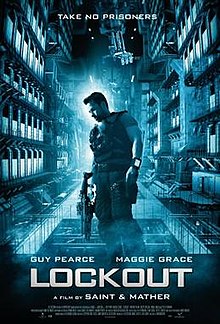
Fix-It Fridays: Lockout

So I went with my folks to see Lockout at the Bear Tooth (best movie theater/pub ever) earlier this week and when we came out of the movie, my mom told me she'd never before been in the middle of watching a movie and thought "Wow, I can't wait to read Vivi's Fix-It-Friday post on this."  Yes, boys and girls, it was that glaringly ridiculous.

Let's start with the good.  The premise?  Badass.  A prison riot in space with the first daughter as a hostage!  Sign me up, baby.  The dialogue?  Funny as hell - and in a good way!  Not in the groaningly bad way that most action movies go for.  (Well, not too groan-worthy.)  Guy Pierce?  Surprisingly awesome as an action hero.  (Who knew?)  But all that awesomeness barely salvaged the movie.  The devil, as is so often the case, was in the details - and in this case the missing details were everything futuristic and/or scientific about the film.

Movies that take place sixty-seven years in the future need complete world-building.  Some things will have jumped forward technologically, while others will still be done the same way we've always done them.  Some movies excel at the futuristic set-decoration, leaving no detail unconsidered.  Minority Report, comes to mind.  Demolition Man.  This one did not.

**WARNING: SPOILERS AHEAD. PROCEED AT YOUR OWN RISK.**

We open in a fancy New York hotel suite.  With this kind of lock on the door (--> -->).  Our hero displays his action chops... using guns that have not evolved or developed at all in the last sixty-seven years (I want lasers! phasers on stun!).  He is wearing clothing that would be current today (cuz fashion never changes).  He grabs the All Important Briefcase (which, of course, is latched closed by the little manual dial lock that is so 2079... if by 2079, you mean 1959).  He runs across NYC rooftops (which, if anything, looked a little retro), borrows Batman's motorcycle, and rides it at a bajillion miles an hour... steering one-handed so he can talk on his circa-2013 model iPhone.  There was just NO CONTINUITY OF TIME. 

But alas, that was to be a drop in the bucket of this movie's implausibilities.   I think they were just building up our resistance to the idiocy so by the time the deep space prison was plummeting out of orbit toward the Eastern Seaboard and our Hero and Heroine leap out of it to plunge through the upper atmosphere and parachute down to land safely on a freeway the collective groan in the audience at the sheer ridiculousness isn't quite as loud as would have been an hour and a half earlier.

But I'm getting ahead of myself.

Some things would have been easy to fix.  Instead of having the President's Daughter mouth off that global corporations hadn't invested millions in this prison space station without expecting to get some deep space research data in return (prompting me to fervently hope there had been a massive currency revaluation), just have her say billions or trillions.  Change one consonant, do another take, problem solved.

Others would have been fun to fix.  When our hero is fist-fighting in a zero-grav chamber, show what actually happens when you punch someone in zero grav (i.e. you both go flying in opposite directions and ricochet off every available surface... rather than flying together to slam into the wall which they then don't bounce off of, for some reason).  Have your fight choreographer read Ender's Game and then really have fun with that scene!  (After you change the dialogue so the force holding them floating in the air is not "gravity".  Or am I completely wrong that gravity is an attractive force?  It's been a while since I've read my Newton, but somehow I don't think the force that makes you float in mid-air on a Space Station that appears to have normal gravity everywhere else can be called "gravity".  Just sayin'.)

But the real issue was the ticking clock: the space prison plummeting toward earth in the Fastest Orbital Decay Ever Imagined.  I realize, screenwriters, that you needed a catastrophic timebomb to amp up the stakes and give Our Hero a reason why he had to get the First Daughter off the station STAT, but couldn't you think of anything better than a prison in space that requires constant 24/7 maintenance attention to keep it from crashing down on New York?  Even if that were even remotely scientifically plausible, don't you think it's the first issue that investors would have asked them to fix before building the damn thing?  Lest it someday fall from the sky and crush them while they are enjoying La Boheme in their private box at the Met?

You need a reason why the President would be compelled to shoot the prison station to smithereens to save the lives of millions even though his daughter is onboard, right?  Easy - you arm the prison.  Give them nukes (or some even scarier futuristic equivalent).  Say the weapons were put on the station (where all the prisoners were supposed to be unconscious all the time in their cryo-whatsis anyway) to either be a first line of defense if aliens ever come for us or, more plausibly, say that the US put them on the station so they would be able to destroy their enemies from space if the need ever arose.  Only, of course, that backfired because now the convicts are in charge and they are pointing the Big Scary Guns at DC and making demands.  Maybe they even fire one off, take out MIR in a fiery blaze, to prove they mean business.  But none of this the-station-is-plunging from orbit crap.  Let's have a little respect for the laws of physics, all right, people?

The other bonus of having the space station stay in space where it belongs?  We skip the jumping out of the space ship and re-entering the earth's atmosphere without burning up or freezing or having your body battered by the sheer force of traveling at those speeds scene.  Oh! And I almost forgot the part where the hero and heroine are separated by the explosion, but he somehow manages to get back to her side to pull her chute for her even though he has no method of propulsion.  So that whole sequence... maybe just a nice explosion instead?  One that sends them hurtling out into space in their little suits and who knows if the good guys will find them among the debris before their oxygen runs out... and there they are, floating together, her injured, him badass, maybe he's building her a space-raft out of debris with his bare hands and using solar winds to sail them back to the nearest authorities because he is just that cool.  Because frankly, that would be more believable.

But you have to respect a film that, in spite of all the seriously ridiculous flaws, still manages to be a deeply enjoyable, entertaining as hell movie.  Sure, they did a lot wrong, but hey, they did something right.

Friday, June 22, 2012

Fix It Fridays: The Eagle, Centurion, etc.

Welcome, boys and girls, to the return of Fix It Fridays! 

So, there are these movies that hot men love to star in because they get to play with swords and because of Gladiator and the 300, the studios like to greenlight them because they believe they will make pots of money, but I would like to put out a request into the universe that the studios and the hot guys find better ways to spend their time and money. 

There are several of them.  The Eagle - Channing Tatum goes north to reclaim the Eagle standard thingy that a Roman general lost in northern England and fights the Picts and... I dunno, I got bored.  King Arthur - Turns out the legendary king was really a Roman soldier (Clive Owen for the win!), in northern England, straddling Hadrian's wall and fighting the Picts,  That sound you heard was my head exploding from the force of the historical inaccuracies.  Centurion - Michael Fassbender leads a ragtag band of Roman soldiers trying to survive behind enemy lines in northern England and fights the Picts and there's this hot chick with a spear out to kill all of them and I started rooting for them all to die so the movie would end. 

See, here's the problem.  I can't root for the Romans.  The Romans are the bad guys.  But the hot guys are all fighting on the Roman side.  WTF?  The Romans come north to make the world Rome and rape and kill and do all the things the Bad Guys do in Braveheart... so we're supposed to want them to win?  Y'all, I'm rooting for the Picts all the way.  In Gladiator, we rooted for Russell Crowe because he was the underdog, he'd been wronged, and he was fighting for his life - not to enslave or imprison others.  In the 300, we root for those plucky Spartans because they are defending their homes and loved ones.  In The Eagle & King Arthur & The Centurion, our heroes are the ones storming into someone else's homeland and declaring themselves rulers of the universe, raping, cutting out tongues, and pillaging.  They don't have loved ones to defend (there are no Roman women in England) and the Picts were certainly not threatening to storm the Colleseum.  They are In The Wrong.

No matter how many noble individual motives and grandiose lines of dialogue you throw at me, I'm still gonna root against them.  Far as I can see it, there are only two ways to fix these movies - 1) Make the Picts the heroes and give them a hot celebrity to fight on their side.  Or 2) Stop making these damn movies. Give me someone I can actually root for.  Because I like hot guys with swords.  I'd like to not be rooting for them all to die.

Friday, March 30, 2012

Fix It Friday: the non-fix-it Hunger Games edition

As friends of the blog may know, Fix-It Fridays are when I rant about how excruciating movie-going experiences could be transformed into bliss with a few minor tweaks to plot, story arc, characterization, etc. Today is not that kind of Friday. Before I start talking about my Hunger Games movie experience, I would like to make two things very clear:

1) There will be no spoilers. None. Read with impunity, spoiler-wary friends.

2) I love the books. I am in no way proposing to fix anything about them or the movie.

This is about movie theater etiquette - a fix perhaps LONG overdue. This is about the things outside of the movie itself that can drastically alter our movie-going experiences.

See, last Friday I went to Hunger Games on opening day. We cleared our schedules to go in the afternoon before the noisy teen population got off school, bought our tickets in advance, and got there early to wait in line to snag good seats. Everything went exactly as planned - except for those things you can't plan. Like the woman sitting directly behind me, who talked loudly through the entire film and belted out embarrassed cackling laughter during pretty much every somber dramatic moment.

I would like to propose an etiquette rule. If you are going to talk to the screen like it will talk back and erupt into awkward guffaws whenever someone has an emotionally significant moment of silence, maybe you shouldn't go on opening day when it is IMPOSSIBLE for other movie-goers to move to get away from you, after their glares and quiet requests for you to stop talking are ignored.

And, for the record, the actors? They can't hear you. So your full-voice exclamations of "Girl, whatchu doing that for?" and "I told you so!" are only serving to piss off everyone around you. You know, those people who actually want to hear the dialogue you're drowning out.

I honestly don't understand why this woman came on opening day. She had zero familiarity with the books - as evidenced by the man with her who felt the need to explain (loudly) plot points that she'd missed. Not that you have to read books to be excited about movies and not that people shouldn't be encouraged to go and enjoy films whenever the hell they want, but why WHY did she have to completely screw with my enjoyment of the film? I honestly don't know if the movie has dramatic impact because when one woman is cackling in your ear through every quiet moment, it's hard to appreciate the drama.

She seemed to think death was funny in exactly the same way the staff of the Today Show think sex is funny every time they do a story on it. With such excruciating awkwardness that it's uncomfortable to watch their sex-o-phobia on display.

I think my own horrendous movie experience would piss me off less if I felt there was a snowball's chance in hell that she wouldn't do it again, but she just didn't care. She enjoyed herself, being that inconsiderate, and that makes me nuts.

So my fix? I'll be going again. Next week. Mid-week matinee. Sitting in the back so no one can be right behind me, squealing in my ear.

But the societal fix, that's trickier. We've all been to movies where someone else has ruined it for us. And I'm afraid it's bound to happen again. Is that just the cost of rubbing along with other movie-goers? Or do we have a reasonable expectation to be able to hear the dialogue when we shell out our $10+ bucks (plus popcorn)? Is texting (which will get you kicked out of that particular theater) really more disruptive than the woman with no volume button and no verbal filter? Is it common sense that we respect our fellow movie-goers enough to let them enjoy the film too? Or am I wrong to be annoyed because her enjoyment might have been lessened if she hadn't been talking back to the screen?

What's your take?

Friday, October 14, 2011

Fix It Friday: Real Steel

There is a real art to the underdog story. You start with a character you can root for, someone you like and/or relate to and can really get behind. Then you put that character up against impossible odds, and just when it seems like all hope is lost, your character's heart, tenacity, faith and sheer willpower drag them through to an incredible victory. And everybody cheers!

Karate Kid. Seabiscuit. Rocky. Rudy. Major League. We've seen it time and again and we just keep coming back for more, because that addictive underdog story sweeps us up and carries us on a tide of feel-good tinglies right out of the theatre.

Real Steel was not that movie.

Reel Steal wanted to be that movie. It wasn't trying to be Death Race or Running Man or any other kind of dystopian-social-commentary-anything. There were moments when it almost wanted to be Free Willy (if Willy was a giant robot rather than a giant whale), but in this edition of Fix-It Fridays, we're going to teach Real Steel how to be a feel-good underdog story. Ready? Let's get to it.

**STANDARD DISCLAIMER: Spoilers! We got 'em and we're not afraid to scatter them wantonly throughout the post. Consider yourself warned.**

Let's start by looking at ingredient number one of the underdog story: the hero you can root for. Within the first fifteen minutes of Real Steel, we know that Our Hero is running from several people to whom he owes large sums of money and we get to see how he came to be in debt when he himself instigates a reckless bet for twenty-thousand dollars which he loses when he is distracted by a random cute girl in the crowd, allowing his robot (and only source of income) to be destroyed. We also learn that he is a prick with children when he tells a trio of adorable little girls that they can only have a picture with his robot if they give him five bucks. AND THEN, as if that wasn't enough to make him the apple of everyone's eye, we learn that he abandoned his child a decade ago and does not know that child's age - consistently referring to him as nine rather than eleven (even after he and said son have started to bond). What do you say? Isn't that the kind of guy you want to see rise up against the odds and win the day? Of course he is. Especially after he offers to SELL his legal custody of his son (whom he sort of inherited after the mother died) to his ex's sister for a hundred grand and only agrees to spend time with the kid to seal the deal.

At this point in the film, I don't want to see him succeed. I don't even really want to see him learn his lesson about what it is to be a father and grow as a human being. I just want to see a robot malfunction and pummel the hell out of him. Please.

That's not an underdog. That's an asshole. Don't worry, Hollywood, it's an easy mistake to make. They look so darn similar.

Let's move on to tenet number two of the successful underdog film: impossible odds. We are shown a brief montage about midway through the film demonstrating the unbeatable awesomeness that is the super-robot Zeus. I think I might be supposed to dislike the team behind Zeus, though it is hard to tell why, unless it is based on the fact that they are beautiful, rich and intelligent enough to build an undefeatable robot. Yes, the odds of defeating Zeus are impossible, but they aren't really in front of our hero & his kid. Our heroic father-son robot team essentially call them out on national television, so... well, let's look at it like this: would you still root for David if he ran around trash-talking Goliath until Goliath finally agreed to fight him?

And the third element - victory through heart, passion, willpower, etc. Oi. When we see Rocky get knocked down and he struggles to his feet, in spite of the pain we know he must be in, we are awed by his strength of character. The makers of Real Steel were at a disadvantage. They don't have Rocky. They have a robot which cannot feel pain (regardless of the fact that they made a couple half-assed attempts to humanize it a la A.I.) and when he is knocked down and struggles back up in the face of system-failure, it isn't willpower that does it (his or his operator's), it's just mechanics. I'm not moved by my toaster's ability to keep popping up the toast, day after day, no matter the abuse heaped on it.

So how do we fix it? Oh my. Brace yourselves, darlings. This is a big 'un. It might take a while.

First, a quick fix with a flaw in the premise - the idea that a bloodless bloodsport could replace real boxing because it was "more violent" which implies that violence without actual threat of injury or danger is more riveting than the same including the potential for human injury... dude, seriously? Instead, we say that real boxing was outlawed because all of the MMA stuff had gotten out of control with folks dying in the ring and Robo-Boxing took its place as a safer alternative.

Honestly, if I were going to really fix this baby, I'd probably ax the entire opening and re-angle the entire film to be more from the kid's perspective. His is the most interesting story to me. But to keep as much of the story-structure in place as possible, we're going to let Hugh Jackman continue being The Star... and a huge douche (though we are going to down-grade his asshole quotient by a factor of ten).

We open on a scene twelve years before the action of the plot. It's Our Hero's big fight, his big chance as a boxer. The high point of his career. We see his trainer (Evangeline Lilly's dad), we see Evangeline and her puppy love for his manly self, and we see the woman who will become Max's mom. The commentators at the match are talking about the new Robo-Boxing fad and whether it will ever take off. Our hero will get cold-cocked by the Texas jerk in a Mayweather-esq move of questionable sportsmanship. He goes down and sustains some injury such that his career is over. He will leave the girlfriend (Max's mom-to-be) and his trainer and everyone and head off to try his luck in the Robo-ring, because he sees himself as a fighter and only that. He can't stop now. He will not know that Max was conceived and therefore is not a dead-beat dad on purpose. But we learn all of that throughout the course of the film. We cut away at the knockout.

What next we see is Our Hero, down on his luck, trying to string something together, strapped for cash and in debt (but not gambling stupidly) and getting unlucky (not losing due to his own stupidity and overly cocky attitude). The kid he didn't know about lands on his doorstep unexpectedly and he's stuck with him for a few months but he DOES NOT sell the child and he tries to sort of play at dad half-heartedly. I know this makes it into a dozen other cliche cheesy family-friendly movies (many starring the Rock and an adorable girl who likes to bedazzle footballs), but having your hero actually SELL his freaking CHILD... it's hard to come back from that when it comes to likeability.

When they find the robot, Atom, our hero will humor the kid at first (rather than telling him over and over again that his dream is stupid and pointless) and then eventually start to believe in the 'bot and through that begin to bond with the child. To make sure we still have conflict, he could, at some point, sell the kid's bot out from under him for the money and then have to make it right. Or perhaps child protective services becomes involved at some point and he has to prove that he's a fit father... but what we need is for him to be struggling against circumstances, not causing his own bad situation with bad choices (and the bad karma of his extreme jerkishness).

Also, the bad-guy 'bot, Zeus, and his owners could offer up some kind of prize to anyone who can defeat the undefeated robot. That gives the kid a motivation to challenge the Big Bad to a fight and provides a concrete reward if they win. It's always good for the audience to know what we're rooting for. (As it stands, I'm not even a hundred percent sure how this story ended. Who has custody of the kid?)

And after we've done all that, after we've developed concrete stakes for the prize-fight and have a root-able hero, we just hope that it's enough to counteract the fact that robots don't have feelings and can't overcome their emotional challenges. (Or perhaps we go to greater lengths to demonstrate that the robot has human-esq cognition. That could be cool. To have it "glitch" at convenient moments to help the kid or demonstrate emotion of some kind.)

That's the fix (or as much of one as I have energy for tonight). Then maybe, just maybe, then we'll have the makings of an underdog story.

Friday, August 19, 2011

Fix It Fridays: The Green Lantern

You know, based on the one-star review from my local paper and the horrendous word of mouth, I thought The Green Lantern was going to be among the worst films ever made, but you know, it really wasn't that bad. (A ringing endorsement, I know.) The general plotline was good (if a bit heavy-handed - dude, if one more person said the word "fear" I was gonna give them something to be afraid of) and the cast was pretty badass (and just pretty, too. Ryan Reynolds is so six-packy!).

But they made a mistake. One which I think is kinda elementary. Writing 101. Here's the rule (and this is not a rule I found anywhere, just something I'm making up as I go along, so take with a grain of salt): No matter how cool and interesting your world is, your viewer needs a reason to care about it. A connection with a character connects you with the world and gives you a reason to watch.

You know all those disaster movies where the world is crumbling to pieces? Have you ever noticed how they all begin with one random dude (usually not even a primary character, just some guy) being impacted by the first sign that there is disaster to come? It's not a voice-over telling us that there is an asteroid hurtling toward Earth, it is that human moment of Average Joe realizing "Oh shit, an asteroid is hurtling toward Earth!"

Now, good movies can begin with a brief voice-over, a line or two, but if you're still once upon a time-ing after five minutes, your audience is starting to rustle their jujubee wrappers. The Green Lantern's opening seemed to go on forever - and what really killed it for me was the fact that ALL of that information had to be revealed to the hero later in the film anyway, so it's not like we wouldn't have had a chance to learn all of this (really not that urgent) world-building then.

So immortal dudes harness will, build planet, form green lanterns, imprison fear-eater dude, fear eater-dude breaks free, attacks latern guy's ship, lantern guy gets away but is badly injured and is headed toward earth. At most what we need of that is that latern guy was attacked and is injured & headed toward earth. The rest can wait.

The problem with starting with massive chunks of worldbuilding is that it sucks away time that could have been used establishing the relationships between the hero & the girl & the villain. They all knew each other in their childhoods. The bonds they formed then are important. The day Hal's father is killed seems rather crucial, but all we get is one tiny flashback of the crash with no shots of the girl or the villain? What the movie needed to do was open there. Open on the HUMAN side of the story, not the alien side.

Three kids who will later grow into the pivotal trio, playing on an airfield during a test flight. You see how each of their fathers shaped who they became. You see that the hero & the girl have a connection (perhaps she is the one to first try to comfort him when he sees his father blow up). You see the villain is brilliant but always feels like an outsider. Then when you jump forward and they are all adults, you don't have to work so hard to demonstrate a depth of relationship between those three.

What's weird is that the rest of the movie almost plays as if that scene was really in the opening. I often had this feeling like I was supposed to know the relationships, the history. If I had, I might have cared more about the characters. Instead we meet our hero for the first time when he is crawling out of bed with a blonde we never see again and on his way to have a fight with the heroine before flying a daring test flight. It was like the Rocketeer, only... not.

Moral of the story: Harry Potter doesn't start with a voice over explaining that Hogwarts exists and magic is cool. It starts with Harry. Our character is our access point to the world. So instead of starting with the green lantern mythos and working inward, start with Hal and work out. That's the fix.

Friday, August 5, 2011

Fix It Fridays: Captain America & the Love Interest of Doom

It's time for another exciting edition of Fix-It Fridays! Today we take a look at the 'Roid-a-licious Captain America! You too can juice it up for justice, baby!

Ready? Let's do this. Slap on your blue ski-mask of patriotism and let's get rockin'.

**Standard Disclaimer: There will be SPOILERS. Oh yes, there will be spoilers. Massive, six-packy, on-neon-blue-steroids SPOILERS. Consider yourself warned.**

For the record, I am not a Marvel purist. I love me some X-Men and some Avengers, but I'm not enraged when the movies are their own entity, bearing only a vague resemblance to the classic comic plotlines. Therefore, today we are examining the film on its own merits, independent of the Marvel-verse. Mmmkay?

Now, I'm a sucker for supers, so for the most part, I really enjoyed the movie, but as we walked out of the theater, I found myself saying, "Pretty cool. It's a shame the romance arc was totally f*cked." (I was chatting with friends. I promise. I do not just randomly announce my opinions to my fellow movie-goers in a sort of critical Tourette's.) One of my cohorts might have argued with me, and there might have been a no-holds-barred I-know-my-romance-arcs smackdown, but I confess to nothing.

You may be asking, What was wrong with the romance arc, Vivi? Oh, dear reader-friend, what wasn't wrong with it?

There was no happily ever after. Which, admittedly, in a super-flick is not that unusual, but there was no potential for a happily ever after or even a happy for now! At the end of the film, Captain America is cryogenically frozen in the impenetrable shell of his own awesomeness so he can be transported into the future seventy years and thawed out to participate in The Avengers movie next summer.

Seventy years. His love interest is either at least ninety-five years old or dead. Either way, he is much less likely to get with the bow-chicka-wow-wow. (I had a "My eyes!" moment when I accidentally visualized their reunion.)

What's wrong with that? She was presented as The One, reader-friends. The romance arc told us that these two were gonna live happily ever after, dammit. But instead, our heroine either spent her life A) pining for the death of Captain America (downer) or B) got over it and married someone else and popped out a bunch of babies (thus invalidating the romance).

My friend (who foolishly thought to argue romance with me) stated that Captain America doesn't need a love interest because he's married to America. At which point I restrained myself from yelling, "Then why was he cheating on America with Hayley Atwell?" I merely pointed out that the filmmakers established dear Peggy as the Love Interest and then essentially killed her off. Which means Captain America is going to be pining for her for the entirety of the Avengers movie. And as anyone who has seen the Bourne Trilogy knows, there is nothing more pathetic than a pining action hero.

Now perhaps the filmmakers are planning to reveal that Peggy somehow got sucked into the future too, still all young and pretty (let's all roll our eyes together and groan at the totally over-the-top suspension of disbelief required to pull off that ploy) OR they are going to bring in a Peggy lookalike (maybe even a granddaughter) to captivate the Captain (which I find more than a little creepy, not gonna lie). Otherwise, we get Captain Angst in the Avengers and... gotta say, not looking forward to that. Thank God for Robert Downey Jr's snark and My Editor's Hollywood Boyfriend's muscles to keep us from being drowned in Captain Angst's tears.

The annoying thing, to me, is that this was such an easy fix! (Vivi takes a moment to swear and stomp in a circle. Oh, the frustration!)

THE FIX: Peggy is already married. Ta-da! She is the unattainable. Her husband is either A) away at war or B) Howard Stark (somebody has to spawn Tony). She and the Captain still have chemistry, but there is this guilt/tension/resistance and they both know that their Love shall never be (and there can be some question on her side whether she really loves him or is just being kind to a boy who has a crush on her). When she believes him to be dying at the end, she can confess some kind of affection - but the viewer and she and the Captain all know that they could never have truly been together so even though he Longs and Yearns and all that Good Stuff, he is still Available to his True Love Interest in the Avengers or some later film.

But as is, we get to envision the depressing future of Peggy and watch Captain Angst pine, because Peggy is a distraction from his marriage to America. Woe. Woe is us.

Luckily, the Avengers has so many characters, odds are there won't be much screen time devoted to Captain America's girlfriend's hundredth birthday.

Friday, July 15, 2011

Fix It Fridays: Pirates of the Caribbean 4

It’s time for the second edition of Fix It Fridays! Today on the chopping blog: Pirates of the Caribbean 4!

Ready? Okay. Let’s commence. (Yar!)

**Disclaimer: I liked this movie, but in my subjective opinion, it could have been even more entertaining… and here’s how. Oh, and there are beaucoup spoilers. You’ve been warned. Or, in pirate lingo, ye've been waarrrrned.**

The beginning of the movie was riddled with Tell Don’t Show exposition – for shame, pirates! Once it got going, it really picked up steam, but the beginning was ponderous at best.

We open with a random dude being drawn up in a fishing net and taken to Spain. Spain plays a tiny role, the random dude plays no role, and all it does is establish that we’re talking about the fountain of youth. Blech.

In MY VERSION: We open with the Black Pearl sailing through the night, another ship firing on her – it’s Queen Anne’s Revenge! Blackbeard! (Though we don’t SEE the pirate himself at this point so he still gets his Big Entrance later.) We SEE the preacher do something stupid and heroic (to establish his character more effectively than just seeing him strapped to the mast.) We SEE Geoffrey Rush hoisted up by his foot as the Black Pearl comes to life and snares its own crew. We SEE the ship begin to sink, see Barbossa realize what is about to happen and pull his sword from his scabbard. He draws back the sword, lightning flashes, illuminating the blade as he swings toward his own leg, and… SMASH CUT TO THE TITLES!

Thus, when we see Rush enter later with his peg leg, we have an ooooh moment. Savvy?

We fade in to London. The fake court scene and chase through London is... silly. I don't really think we need it. I would actually like it better if Jack was being chased because of a crime committed by the Other Jack Sparrow - the lovely Penelope. He tracks her down, in the unusual position of trying to clear his name, and they fight...

But.

How does Jack know her? He recognizes her from a sword move, but it is later revealed that he knew her as a sheltered virgin convent girl? Whaaa? Perhaps instead of fading in to London, we fade in to Spain, Fifteen years ago... and see the scene ourselves... but honestly, my main problem with Penelope is that her character is all over the place. Is she a virtuous maid or a sword-fighter? Blackbeard's mercenary daughter or his conscience? Her character is not in conflict, because her character is conflict. And we are never rooting for her.

That is the central problem of the film. When we get to the climactic scene at the fountain, we aren't rooting for any particular event. And this is not a problem with the climax, but rather with all the ground-work laid to get us there. When you watched the first pirates movie, you were rooting in that swordfight between Barbossa and Jack. Can you say the same of Pirates 4? The outcome was blurry because we had just been fed a string of silliness at the beginning when the filmmakers should have been making us care about the outcome.

I am, however, deeply in love with the Evil Mermaids and therefore will forgive much. But still, my fix? Show. Don't tell. You're a visual art, film. Act like it.

Friday, July 8, 2011

Fix It Fridays: Limitless

Hear ye, hear ye! Today we begin what may (or may not depending on my whim) become a recurring feature on the blog. It’s Fix It Fridays! Hi, my name is Vivi and I’m a movie addict. But if loving movies is wrong, I don’t want to be right, baby.

I’ve always loved movies, even before I possessed the critical faculties to distinguish a good one from a bad one. When I was a youngun, I used to say I loved every movie, because I didn’t draw a line between the movie & the movie-going experience. And while I still love all movie experiences, I am now much more critical of the films themselves. (Tangent: I think that editorial part of the brain develops during puberty while the creative part develops much earlier. Your thoughts?) I’m also the kind of girl who doesn’t like to notice a problem without coming up with a solution, so when I’m watching a movie and it isn’t quite working for me, I rewrite it in my head. I identify the pieces where it went off the tracks and rework them in my head so they are perfect, shiny and new. Sometimes, I become so attached to my version that I forget how the movie actually went.

Anyway, I’ve decided to post a few of my “fixes” here on the blog, just because I find them interesting and I can, because I am the god of my blog-iverse. Today, we're taking a look at Limitless. A recent not-so-blockbusterish release starring Bradley Cooper & Robert De Niro.

You ready? Let's get to it. (Oh, and there will be HELLA SPOILERS so consider yourself warned.)

Basic Premise: Our hero is a smart guy who never lived up to his potential. He is a writer chock full of writer's block, living in a lousy apartment (which probably costs a mint cuz he's a New Yorker), divorced and currently being broken up with by his hot, successful blond girlfriend. He bumps into an old (drug-dealer) acquaintance and is given a designer pill (first one's on the house, that's how they hook you, baby). Said pill is like Adderall on Crack (which would be actual crack, right? but in this case is just Magic Potential Juice called NZT-### and our boy has been told by the totally credible drug dealer that it's FDA approved and all that good stuff...). NZT makes you sharper, more focused, and basically smartens you up and motivates you at the same time. Our boy cleans his apartment, writes his book (genius!) in a matter of days, and then decides he needs to think bigger. And that's when the real fun begins. His drug-dealer buddy has taken a bullet to the head and there are other people who are veeeery interested in Our Hero's (stolen from the dead dealer) drug stash. Let the thriller portion of the plot commence! Of course the drug has side effects and well, I'll stop it there because I have to leave some surprises.

That's the basic. Here are my issues:

1) I didn't like the hero. Even my natural instinct to like Bradley Cooper (and his dimples) couldn't overcome the douchiness with which the hero is first introduced. His problems are very clearly his own fault and while the dickhead hero might have a ring of verisimilitude, it doesn't make me want to root for him to overcome and prevail and all that good stuff.

THE FIX: We want to like him. We do. So maybe let's not have the very first thing he does under the influence of the drug be to manipulate his married landlady into having sex with him in exchange for help on her law school paper. And also, instead of a mid-morning drinking binge and literally no words written (I have no sympathy for that), let's show him struggling. Down on his luck, but not self-sabotaging. Writing, having his editor reject his chapters as uninspired, or better still, have his editor tell him that the book is good, but the market is shifting and they just don't have a place for it in their list right now - so it looks like he is trying, doing everything he is capable of without the drug, but it just isn't enough. Then the message of the story becomes about rewarding EFFORT, rather than the rather unsatisfying rewarding of the Douchebag that actually occurs in the film.

2) The publishing industry don't work like that. How exactly did this apparently UNPUBLISHED science fiction author get a contract with an advance without having written a SINGLE WORD? Did he somehow sell on a pitch? WTF? And why is he hand-delivering printed out pages to his editor's desk. Did his internet get disconnected? Does he not live within tripping-over distance of one of the gajillion Starbucks with free internet in the five boroughs area? And since he hasn't bathed in a while and looks a little like the Unabomber, how did he even get in the building with the suspicious manuscript shaped package?

THE FIX: Easy easy easy fix. Just have him be a writer in a sophomore slump. Have his first book already released to tepid reviews. Someone can ask him about his published book and say something like "Why haven't I heard of it?" (Writers hate this question. At least I do.) His option book is due, it's already looking like it won't be published, the numbers just aren't there. His career is over before it began... Depression is circling, self-doubt triggers the writer's block, then the pill enters the equation. He writes a BRILLIANT second book. Epic. The publishing house reverses course. They will relaunch him. Promo campaigns and book tours are suddenly on the table. His new book is JUST THAT GOOD. (But he emails it. Dear God, please let him flipping email it. And the actress playing his editor misses out on those luscious twenty-two seconds of screen time.)

3) The stock market don't work like that. Our hero makes two million dollars from a hundred thousand in a week on the stock market. That isn't possible. I realize he's supposed to be freakishly brilliant and that makes it possible, but the math just doesn't work (and we all know how rabid I get over faulty math). The margins of return are too low per sale, the way stocks (especially speculative ones) are effected by large orders, taxes... I'm not an expert on this, so I consulted with my dad (who is) on this particular point because it seemed hinky and he was even more bothered than I had been by this flaw.

THE FIX: Poker. It's that simple. Gambling does have the rate of returns we're talking about. There is even a montage showing our boy cleaning up at poker - which is logical considering his ability to calculate statistics, read body language, and psychologically profile his opponents. But then, immediately after the high living poker montage, he is broke (wha? what happened to the money he stole then gambled into a larger amount?). He goes to a loan shark. Ugh - stupid plot device because you need the threat of the loan shark later... but really you don't. Have the Thug role be played by someone related to the Drug Dealer, not someone our Idiot Hero owes money because he somehow spent (how is that smart, brainiac?) all the money he stole/won. The truth is, our hero could make forty million on poker alone. So why the big significance placed on making a forty million dollar bonus brokering a merger? I suppose if our hero wants to be president, it would look bad if he made his millions gambling... but not if he invested those millions in philanthropy. Anyway, can you be elected president if you are a person of interest in multiple homicide investigations? Wouldn't that be the PR campaign from hell.

Okay, moral of the story - the movie was good. Fascinating. But the hero needed to be less of an ass, he needed to have a book (failed) under his belt before he got the contract he couldn't complete, and the money trail needed a jolt of logic. Still, intriguing premise. Very interesting idea.

Sadly, it's impossible to actually predict events the way he was credited with doing because people are often irrational, illogical, or just plain dumb. And while you can predict that we will react irrationally to a certain stimuli, it is impossible to predict the stimuli, the trigger that will set off the ripples in our jacked-in society - which is why we're always chasing yesterday's successes.